Showing posts with label Volcano. Show all posts

Thursday, September 23, 2010

Pacific Ring of Fire


Pacific Ring of FireImage via WikipediaIn closing of Volcano Week since I decided I was going to give you a three day weekend I decided to give you a little information on the source of all the volcanoes of Costa Rica. Today we will talk a little bit about the Pacific Ring of Fire.

The Pacific Ring of Fire I will actually start out by saying is not a ring it is more of a horseshoe shape. The ring is opened from Australia to South America but who cares they call it a ring and that is that. Just imagine basically a ring of fire running along the coast of the Pacific ocean all 25,000 miles of it and there you have your Pacific Ring of Fire. This is volcanic trenches, plate movements, and lots of activity. It is home to 452 of the worlds volconoes. Which is a grand total of 75% of the worlds dormant and active volcanoes so you can see why the Ring of Fire is so important to celebrating our Volcano Appreciation Week. Because of all the activity here at "The Ring" 90% of the Earth's earthquakes happen here.

Costa Rica is the result of the Coco plate being subducted beneath the Caribbean plate which is actually how Costa Rica was formed with the friction of the two plates heating up and shooting volcanoes to the ocean floor through time and rising and rising of volcanic material connecting the southern part of Nicaragua and the Northern Part of Panama. Also through this subduction mountains were raised from under the sea floor along with the volcanoes and this is why in some of Costa Rica's highest points you can find sea fossils. Hope you enjoyed Volcano Week and stay tuned for Next week is Costa Rican History Week!!!!
Enhanced by Zemanta

Wednesday, September 22, 2010

Magma, Lava, & Tephra


Arching fountain of a Pahoehoe approximately 1...Image via WikipediaSince it is still Happy Volcano week I thought I would describe the different between three terms you might here during your visit to Costa Rica. First of all one that people always ask is what is the different between Magma and Lava?

They are both motlen rock but Magma is located in magma chambers below the Earth's surface and lava is molten rock that has reached the Earth's surface. The tempature of mamga is between 1300F - 2400F and lava is 1300F 2300F very similar. Lava probably comes from the Latin word "Labes" which means to fall or slide which best describes its action when it reaches the Earth's surface.

Now a third fragment you might not be too familiar with but you should know when visiting Costa Rica is Tephra. Tephra relates very much to magm and lava. Lets look at it like this. Lava is to magma in an extusive form what Tephra is to magma in an explosive form. What this means is that Tephra is fragment material produced by volcanos which becomes airborne. This is very common in history in Costa Rica. We always here have coffee crops were destroyed from acid rain and the present Turrialba volcano activity. Ash can travel for miles into the stratosphere and large amounts of Tephra can reflect light and heat from the sun and tempatures on the Earth can drop just from the eruption of a volcano. Now thinking for the last post I wrote at the start of volcano week the Tephra material is a result of what kind of eruption that is very common in Costa Rica? Pyroclastic Eruptions! Very good I can see your learning.  The picture in this blog is not of Costa Rica but I liked it so much I thought I would share...
Enhanced by Zemanta

Tuesday, September 21, 2010

Turrialba Volcano Might Re-Open?


Turrialba VolcanoImage by Costa Rican Resource via FlickrI personally declared it volcano week since it seems to be the topic of this blog for the last couple of days it seems the local newspaper is lending itself to help me out. La Nacion the main news paper in Costa Rica which I consider the most formal and proffesional came out with the most unproffesional and informal article I could imagine. It was about the idea of re-opening the Turrialbal Volcano, you can read the article in Spanish here.

If it is time to reopen the Turrialba volcano than fine lets do it but if its not than lets wait. I find it interesting that the only way to get to the crater in the rainy season would be for the US not to send warships down but to send some tanks down. The roads are horrible and with these rains I can imagine not much better. The roads in the article were not so much an issue in the article in arriving but during an emergency evacuation. The article then talks about how the volcano is letting out a lot of gas and that it could be dangerous to the tourist, uh? Does this mean like going to Poas and you should only stay at the crater for 30 minutes because of the gases being released or does this mean dangerous from the moment you arrive.

The suggestion from La Nacion is that you would have to hire a tourism proffesional company to take you to the top of the crater to be safe. I've got news for you I run a tourism proffesional company and I dont have a clue when the Turrialba volcano is safe or when it is not safe I just go by what the experts tell me. Well I hope they dont open the park today but if it is open for the next high season I will be looking forward to it it would be quite the plus to any costa rican family vacation with the activity it is displaying and quite the free back massage with the road to get there.


Enhanced by Zemanta

Sunday, September 19, 2010

Stratovolcano: Arenal Volcano Costa Rica


Cutaway diagram of subduction zone and an asso...Image via WikipediaArenal Volcano is the youngest volcano in all of Costa Rica. It also happens to be one of the top 10 most active volcanos on the planet. This is also a place of extreme natural beauties that tourist from all over the world come and want to see and do some of the adventures in the area. For those of them who decide not to get a guide and if they get the chance to read this tweet from their Spa while looking at the volcano then I hope you find it useful and if not I hope there are some Science classes out there that will:

ARENAL VOLCANO COSTA RICA STRATOVOLCANO

  • Stratovolcanos are common in subduction zones - a subduction zone is part of plate tectonics where oceanic crust is drawn under continental crust
  • Arenal is considered an Andesitic Stratovolcano which is given the name after the Ande mountains and describes the composition of minerals that are released from the Arenal Volcano
  • The tourist come to see the Pyroclastic flows which is solid to semi-solid fragments and hot, expanding gases that flows down the flank of the volcano make for a spectacular show. 
  • Arenal is a result of the Subduction of the Coco & Carib Tectonic plates.
  • The Pacific Ring of Fire is the most common place for Stratovolcano.
  • Stratovolcano make for some of the best booms on the planet and not just tourist booms...


Enhanced by Zemanta

Thursday, September 16, 2010

Poas & Turrialba Volcano Ready to Erupt


Scheme of a phreatic eruption.Image via Wikipedia
PHREATIC  ERUPTION

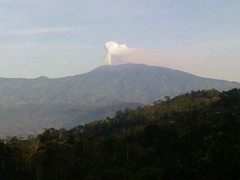
Yesterday on September 15th 2010 I was driving to Pacuare River enjoying the view of the smoke of the Turrialba Volcano. I was remembering a few years back when we had a group scheduled to hike to the Turrialba volcano and we had to cancel because the volcano began some activity. The group was pretty bummed and we brought them to Irazu and they just didnt understand why they couldnt go to Turrialba. First of all for an adventure company like us, safety first. Having a group on the side of an active volcano while it erupts, yes, it is exciting and quite the adrenaline rush but once it hits the headlines it really isnt good for business. As a guide you explain what can happen and some just go on to think it can ever happen to them.

After seeing the Turrialba Volcano yesterday and seeing how the activity has grown over the last 18 months and now the Poas volcano has picked up quite a bit of activity I thought I would explain why we as a company dont hike up the side of the Turrialba volcano with clients these days and how Poas volcano might soon be closed more days than open.

The Turrialba volcano continues to release certain gases through its crater which indicate that there is a body of magma below releasing these gases. The danger at the moment is not that the magma is going to come up all at once and do what you would imagine your average volanic eruption to be with lava shooting up and pouring down it's side like Arenal volcano. The danger is what is called a Phreatic eruption.

A Phreatic eruption (PICTURE EXPLAINS PERFECT) is when the area of magma makes instant contact with surface or ground water causing instant evaportation and explosion of steam, ash, rock, and a volcano bomb. This is what we saw happen to Mt. St. Helen in 1980. To say the least this would be nothing pretty to be standing anywhere near taking a picture with your "I love CR t-shirt". These eruptions can vary in size and most result in acid rains that affect nearby agriculture.
Enhanced by Zemanta

Tuesday, September 7, 2010

No to Condos at Lake Arenal Costa Rica


Le lac Arenal, au Costa RicaImage via Wikipedia North American investors were planning to put some condos up at Lake Arenal, the home of the planets most active volcano. It is a beautiful spot; however, they were stopped short by the Supreme Court who ruled in favor of a non-profit environmental watchdog. It seemed that water and waste resources were inadequate. A new Environmental Impact Study will be done. Don’t mess with Mother Nature, in Costa Rica.
Enhanced by Zemanta

Thursday, July 15, 2010

This was Amazing!!!


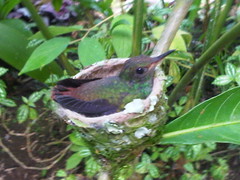
In all of Costa Rica with the class IV rapids and the erupting volcanoes I have to say seeing this was right at the top. I came upon this hummingbird sitting on it's nest.
Enhanced by Zemanta